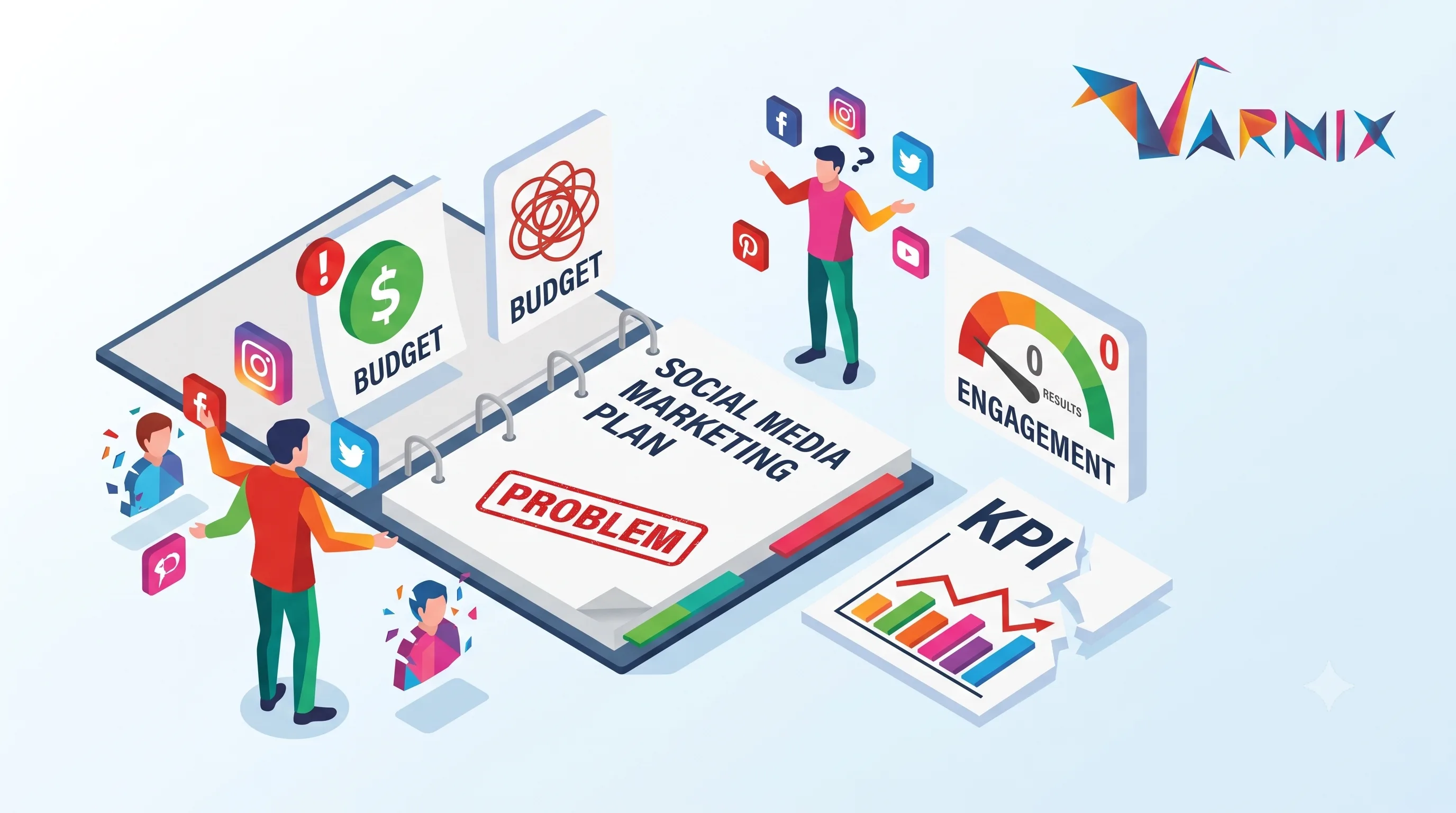
Most social media marketing plans fail for the same handful of reasons: no clear strategy behind the posts, content that isn't built for the platform it's on, no consistent measurement of what's working, and budget spread too thin across too many channels. Fixing these four issues solves most of what goes wrong.
What Are the Most Common Problems in a Social Media Marketing Plan?
- Posting without a documented strategy or clear goal
- Copying the same content across every platform
- Inconsistent posting schedules
- No system for tracking what's actually working
- Chasing likes and followers instead of leads or sales
- Spreading a limited budget across too many platforms
- Slow or missing responses to comments and messages
- No plan for what happens after someone clicks through
Each of these on its own is fixable. Together, they're usually why a business feels like it's "doing social media" without seeing any real return.
Why Do So Many Businesses Struggle to Measure Social Media ROI?
According to HubSpot's 2026 State of Marketing Report, 20.6% of marketers still name measuring ROI as a top challenge, even though most brands now run five or more marketing channels at once. The problem usually isn't a lack of data. It's a lack of a clear definition of what success actually looks like before the campaign starts.
If a business never defines whether a post should drive awareness, website clicks, or direct sales, there's no way to judge whether the post worked. Every metric ends up looking like a vanity metric because nothing was tied to a business outcome from the beginning.
Is Posting Without a Strategy Really a Problem?
Yes, and it's the most common one. Many businesses post because they feel they should, not because each post supports a specific goal. This leads to inconsistent messaging, a mix of content that doesn't build on itself, and no clear reason to keep following the account.
A working plan starts with three questions: who is this for, what do we want them to do next, and how will we know if it worked. If a plan can't answer those three questions, it's not really a strategy yet. Agencies exist largely to solve this gap; see what a social media marketing agency actually does for how this usually gets structured.
What Happens When Content Isn't Tailored to Each Platform?
A LinkedIn post reformatted for Instagram, or a TikTok trend recreated for LinkedIn, usually underperforms on both. Each platform rewards a different format and tone. LinkedIn favors text heavy posts with a professional angle. Instagram and TikTok favor short, visual, fast paced content. Reusing identical content everywhere tells the algorithm, and the audience, that the content wasn't made for them specifically.
This doesn't mean starting from scratch for every platform. It means adapting the format, length, and hook for where it's actually being watched.
Why Does Inconsistent Posting Hurt Results?
Platforms reward accounts that post regularly because it signals an active, reliable source of content. A business that posts five times one week and then goes quiet for a month loses momentum every time it stops, and has to rebuild reach from a lower starting point each time it returns.
Consistency matters more than volume. Two well made posts a week, every week, will usually outperform a burst of ten posts followed by three weeks of silence.
Is Chasing Vanity Metrics a Real Problem?
It is, and it's one of the easiest traps to fall into. Follower counts, likes, and views are visible and satisfying, but they don't always connect to revenue. A post can get thousands of views and generate zero leads if it wasn't built with a next step in mind.
The fix is tracking metrics tied to business outcomes instead: click through rate to the website, cost per lead from paid posts, and actual conversions from social traffic. These numbers are less exciting to look at, but they're the ones that tell you whether the plan is actually working.
Why Do Budgets Get Wasted Across Too Many Platforms?
A limited monthly budget split across five platforms rarely performs as well as the same budget focused on two platforms where the target audience actually spends time. Every new platform requires its own content style, posting rhythm, and often its own ad creative. Spreading thin means doing everything at a mediocre level instead of doing two things well.
This is a common problem for growing businesses trying to scale ad spend. See scaling Meta and Google Ads in 2026 for how to prioritize spend once you've picked the right channels. If paid performance is the main goal, working with a performance marketing agency rather than a general social team can also make a real difference.
Is Slow Customer Response a Planning Problem?
Yes. Many businesses treat comment replies and DMs as an afterthought rather than part of the plan. But a customer who messages a brand and waits three days for a reply has often already bought from a competitor. Response time is now part of how customers judge whether a brand is trustworthy, and it directly affects reputation in places customers can't always see, including how AI tools describe your brand when asked. See the current playbook for brand reputation in AI search for more on this.
How Does a Business Actually Fix These Problems?
- Write down one clear goal per platform before creating content
- Adapt content format to each platform instead of reposting identical content
- Post on a fixed schedule, even if it means posting less often
- Track metrics tied to leads or sales, not just likes and views
- Focus budget on two platforms instead of spreading it across five
- Set a response time target for comments and messages, and stick to it
Most of these fixes take planning time, not more budget. If your team doesn't have the bandwidth to run this consistently, that's usually the point where outside help pays for itself. See outsourcing social media marketing: pros, cons, and costs and is hiring a social media marketing agency worth it to weigh that decision, or how to choose the right social media marketing agency if you've already decided to bring someone in. Varnix builds these plans around measurable outcomes from the start, rather than posting volume alone.