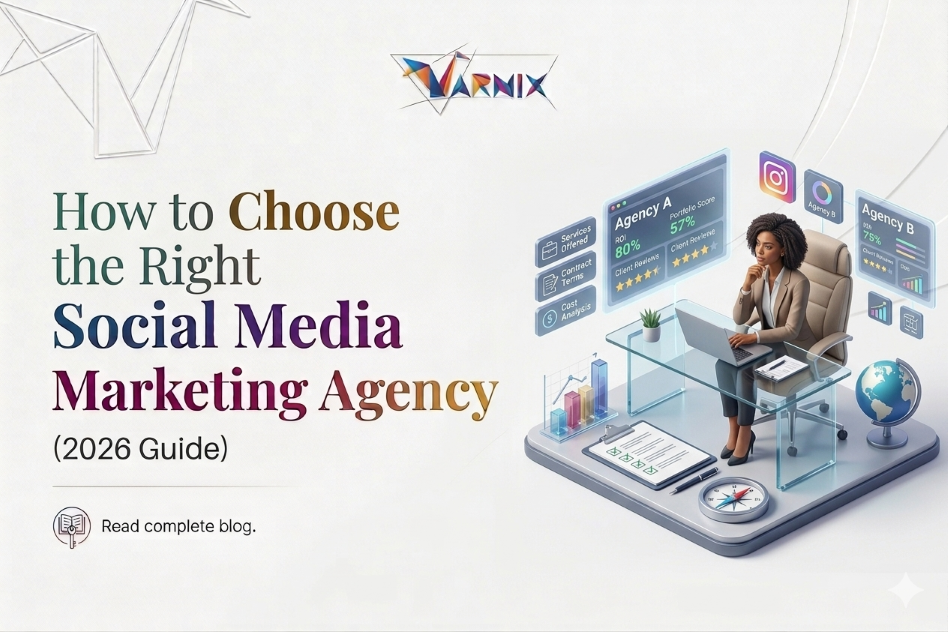
Most businesses don't fail at social media because they didn't try. They fail because they chose the wrong partner at the wrong stage — and by the time they figured it out, they'd spent six months, a significant budget, and a lot of internal goodwill on results that didn't move the needle.
Choosing a social media marketing agency is one of the more consequential decisions a growing brand makes. You're handing over the public voice of your business to an external team. Done right, it accelerates everything. Done poorly, it can actually damage brand perception while draining your marketing budget.
This guide gives you the complete framework — from initial clarity about what you need, through discovery and evaluation, all the way to contract terms and what good onboarding looks like.
1. Why Choosing Wrong Is Expensive
Before the how, let's be clear about the stakes.
The average business that makes a wrong agency hire spends 4–6 months before admitting it isn't working. In that time, they've paid the retainer, lost opportunity cost on what good social media could have generated, experienced some brand dilution from misaligned content, and now have to restart the entire search process — with less budget and more scepticism.
The problem is almost never that social media doesn't work. It's that the agency-brand fit was wrong from the start — mismatched industry experience, the wrong service scope, unclear expectations, or simply a team that was talented but not right for that specific brand's voice and goals.
Getting the selection process right saves you all of that.
2. Get Clear on What You Actually Need First
This is the step most businesses skip, and it's the most important one.
Before you talk to a single agency, get honest answers to these questions internally:
- What is the actual business goal? Not "more social media presence." Something specific: 100 qualified leads per month from LinkedIn. 30% increase in direct-to-consumer sales attributed to Instagram. Build brand recognition in a new city before a product launch.
- Which platforms matter to your audience? In 2026, platform selection is strategic, not aspirational. Instagram Reels and YouTube Shorts dominate discovery for B2C. LinkedIn is the primary engine for B2B thought leadership and lead generation. Pinterest drives significant purchase intent in home, fashion, and food categories.
- What does your content production situation look like? Do you have visual assets, product photography, video content, or brand guidelines already? Or does everything need to be built from scratch? This significantly affects what kind of agency you need.
- What's your realistic budget — all in? Not just the agency retainer. Total: retainer + ad spend + any production costs not covered by the retainer.
- What does success look like at 3 months, 6 months, and 12 months? Define your milestones before you hear anyone's pitch.
3. The Agency Types — Know What You're Choosing Between
Not all social media agencies are the same. Choosing the wrong type is as bad as choosing the wrong agency.
- Specialist Social Media Agencies — Focus exclusively on social: strategy, content, community management, and paid social. Strong creative depth on platform-specific formats. Best for: Brands with a clear social-first brief and other marketing channels handled separately.
- Full-Service Digital Agencies — Cover social media as one of several services: SEO, Google Ads, web development, email marketing, and more. Best for: Brands that want one partner for their entire digital marketing presence and value channel integration over social-specific depth.
- Performance-Led Agencies — Built around paid advertising — Meta Ads, Google PPC, YouTube Ads — with organic social as a secondary capability. Best for: Brands with a clear paid media brief and growth targets tied to direct revenue metrics.
- Brand and Creative Agencies — Lead with creative — brand films, visual identity, storytelling — and apply that to social. Best for: Brands in a brand-building phase, launches, or rebrand situations where the primary goal is perception and positioning.
- Full-Spectrum Growth Agencies — Combine brand strategy, creative production, social media management, performance marketing, PR, and often web and SEO under one roof. Best for: Brands that want cohesive strategy across all channels without managing multiple agency relationships.
4. Where to Find Agencies Worth Evaluating
Skip the generic Google search and go to where signal quality is higher.
- Referrals from brands you respect — The highest-quality source. Find a brand in your sector whose social media you genuinely admire, and ask who manages it.
- Platform case studies and partner directories — Meta Business Partners, Google Partners, and LinkedIn Marketing Solutions all maintain directories of vetted agencies. These confirm technical competence and platform familiarity.
- Industry communities and forums — Slack communities for founders and marketers, LinkedIn posts where people share experiences, and niche industry groups often surface genuine recommendations and honest warnings.
- Agency portfolios and content quality — Search for agencies that produce strong content in your category. Find the work first, then find the agency behind it.
- Your own network — Ask your investors, mentors, or peers who they've worked with and — more importantly — who they'd work with again. The "again" qualifier filters out pleasant experiences that didn't deliver results.
5. How to Read an Agency's Portfolio (And What to Ignore)
Agency portfolios are marketing materials. They show you the best of what they've done and omit everything that didn't work. Read them accordingly.
What to look for:
- Industry proximity — Have they worked in your category, or a close adjacent one?
- Platform specificity — Does their work demonstrate genuine platform expertise, or is the same content repurposed across all channels? Look for Reels that feel native to Instagram, LinkedIn posts that generate real comment threads.
- Business outcomes, not just creative quality — Beautiful content is table stakes. What did it do? Look for case studies that mention leads generated, ROAS achieved, or revenue directly attributed to social.
- Recency — Social media from 2022 is largely irrelevant to what works in 2026. Check that their portfolio reflects current work and current platform norms.
What to ignore: Follower counts as the primary metric. Award wins that measure creative rather than commercial impact. Generic "brand awareness" claims with no supporting data.
6. The Discovery Call — What to Listen For
The discovery call tells you more than any proposal document. Pay attention to the balance between talking and listening.
- A good agency asks more than it tells — In the first call, a confident, capable agency spends most of the time asking about your business. An agency that leads with a pitch deck and a package menu in the first 10 minutes is telling you something important about how they work.
- They demonstrate genuine curiosity about your business — Not just "what are your goals?" but follow-up questions: "Why that goal specifically? What's been the biggest barrier so far?"
- They're honest about what they don't know — A trustworthy agency says "we haven't worked in that specific category before, but here's how we'd approach it" rather than confidently claiming expertise in everything.
- They push back thoughtfully — If you say you want to be on every platform and they say "let's talk about whether that's actually the right move" — that's a green flag.
7. Questions to Ask Every Agency You Shortlist
Use these in every discovery call or proposal conversation:
About their work:
- Can you walk me through a client that came to you with a similar brief to ours? What did you do, and what were the outcomes?
- What's an example of a campaign that didn't go as planned, and what did you learn from it?
- How has your approach changed in the last 12 months based on how platforms have evolved?
About your account specifically:
- Who day-to-day manages our account, and can we meet them before signing?
- How many other accounts does that person manage simultaneously?
- What's your content approval process, and what are the turnaround times?
About strategy and measurement:
- How will you define success for our account, and over what timeline?
- What KPIs will you report on monthly?
- If results are below target at month three, what's your process?
About the commercial relationship:
- What's included in the retainer versus what's billed separately?
- Who owns the creative assets if we end the relationship?
- What's the notice period and exit clause?
8. How to Evaluate Proposals Like a Professional
Most agency proposals are beautifully designed documents full of confident language and vague deliverables. Here's how to read past the surface.
- Check whether the strategy is specific to you — A good proposal references your brand, your specific goals, your competitive landscape. A generic proposal with your logo dropped in at the top is a template.
- Look for measurement frameworks — How will they measure success? What KPIs are they committing to tracking? Strong proposals define this clearly. Weak ones stay deliberately vague.
- Scrutinise the deliverables list — "Content creation" could mean anything. Push for specifics: how many posts per platform per week, what formats, what production quality, what approval process.
- Compare apples to apples — When shortlisting multiple agencies, build a comparison matrix: same deliverables, same timeline, same measurement framework.
- Ask what's not in the proposal — Every proposal has exclusions. Ad spend (usually). Photography or video shoots beyond basic production. Influencer fees. Knowing what's excluded tells you the true all-in cost.
9. Pricing Models Explained — And What's Fair in 2026
- Monthly Retainer — Fixed monthly fee for a defined scope of services. Predictable cost, but scope creep is common. Fair range in India 2026: ₹25,000–₹2,00,000+/month depending on scope, agency size, and service depth.
- Project-Based — Fixed fee for a defined project: a campaign, a launch, a brand film. Less suitable for ongoing social media management where continuity matters.
- Performance-Based — Fee tied to results — cost-per-lead, percentage of revenue generated. Rare in practice because attribution is genuinely complex.
- Hybrid (Retainer + Performance) — A base retainer covering fixed deliverables, plus a performance bonus for exceeding targets. The most aligned model for brands with clear revenue goals.
- Ad Spend Management Fee — Separate from the retainer — typically 10–20% of managed ad spend. Standard practice.
The 2026 reality: Pricing has increased meaningfully since 2022–23 as quality talent has become scarcer and production costs (especially for short-form video) have risen. Be sceptical of very low quotes.
10. The Shortlist Process — How to Narrow to One
- Score against your defined criteria, not vibes — Use the goals you defined in step one as the scoring criteria. Which agency demonstrated the clearest understanding of your specific goal?
- Separate capability from likeability — Score capability first, then use cultural fit as the tiebreaker.
- Run a small paid test if the decision is close — Propose a paid one-month pilot rather than a long-term commitment. Give both the same brief and evaluate the work quality, responsiveness, and strategic thinking.
- Check references — actually — Call the references, don't just email them. Ask: "Was there anything about working with them that disappointed you?"
- Trust the process, not the pitch — The best pitch doesn't mean the best agency. The clearest, most specific, most honest response to your brief usually does.
11. Contract Terms That Protect You
- Notice period — 90 days is common for established retainers. 30 days is reasonable for smaller engagements. Anything longer than 90 days without strong performance protections should be negotiated.
- Asset ownership — All creative assets produced during the engagement should become your property on payment of fees. This should be explicit in the contract, not implied.
- Performance review clauses — Push for provisions for renegotiation or exit if defined KPIs are consistently missed.
- Platform access provisions — The contract should specify that you retain owner-level access to all your social media and ad accounts at all times.
- Confidentiality — Confirm it explicitly covers your business strategy, product roadmap, and commercial data.
12. Onboarding Green Flags vs. Red Flags
How an agency onboards you tells you more about how they'll work than anything in the sales process.
Green flags:
- Structured onboarding questionnaire covering brand history, audience personas, competitive landscape, tone of voice, and business goals
- Introductions to every team member who will work on your account
- A strategy document presented and discussed before any content is produced
- Clear communication protocols established — who to contact, how, and when
- A defined content calendar and approval workflow set up in the first two weeks
- First content submitted for review before any posting begins
Red flags:
- Jumping straight into content production without a strategy phase
- No formal introduction to the team beyond the account manager
- Vague timelines ("we'll start posting soon") without specific dates
- Asking for social media passwords rather than proper platform access through Business Managers
- First report delivered with no context or interpretation — just raw numbers
13. When to Stay, When to Leave
Signs it's time to leave:
- Communication has become reactive rather than proactive — they only engage when you chase them
- Monthly reports show no trend improvement after six months
- The team on your account has changed without any conversation with you about it
- Strategy discussions have stopped — you're getting execution without thinking
- They've started making excuses rather than analysis when results disappoint
Signs you should stay and invest more:
- Clear upward trends in your defined KPIs even if absolute numbers are still small
- Proactive recommendations coming from the agency before you ask
- Creative work that's genuinely improving over time
- The team demonstrates clear understanding of your brand voice and audience
The Decision Framework — A Simple Checklist
Before signing with any agency, confirm all of these:
Clarity of fit:
- They have experience in our category or a directly adjacent one
- They understand our specific business goal, not just our social media goal
- Their team has the specific skills our brief requires (video, paid ads, B2B, etc.)
Process confidence:
- We've met the team who will actually work on our account
- The content approval process is clearly defined
- KPIs and measurement framework are agreed before work starts
Commercial clarity:
- We understand exactly what is and isn't included in the retainer
- Ad spend is budgeted separately and we know the management fee
- Asset ownership is confirmed as ours in writing
- Notice period and exit terms are acceptable
Strategic alignment:
- Their proposal is specific to our brief, not generic
- They've pushed back on at least one assumption of ours in a useful way
- We believe they'll improve our strategy, not just execute it
If you can check all of these boxes — you've found the right partner.
Ready to Choose? Here's Why Brands Choose Varnix
Varnix is a full-spectrum brand growth and performance media agency. They don't sell packages — they build strategies, and then build the execution around those strategies.
- Relevant experience across categories — Varnix has worked with brands in sports, F&B, real estate, retail, lifestyle, and event marketing — including IPL franchise campaigns and large-scale brand activations.
- Full-team model, not a single account manager — Their engagements include strategists, designers, video producers, copywriters, and media buyers working on your brand.
- Strategy before content — Every Varnix engagement starts with a brand strategy phase — audience mapping, competitive analysis, platform selection, tone of voice, and KPI framework — before a single post is created.
- In-house creative production — Brand films, Reels, Shorts, ad films, motion graphics, 3D mockups, cinematic edits — produced in-house with no dependency on external freelancers.
- Performance Marketing with accountability — Meta Ads, Google PPC, YouTube Ads — full funnel architecture, pixel tracking, segmentation, retargeting, and A/B testing. Every rupee tracked.
- Transparent commercial terms — Flexible engagement models, clear scope documentation, and asset ownership that stays with you.
Book a free strategy conversation with Varnix — contact
The Takeaway
Choosing the right social media marketing agency isn't about finding the most impressive pitch or the lowest price. It's about finding the team whose experience matches your brief, whose process gives you confidence, and whose commercial terms protect your interests.
The framework in this guide — clarity on your needs, understanding agency types, reading portfolios critically, asking the right questions, evaluating proposals honestly, and reviewing contracts carefully — is everything you need to make a decision you won't regret.
When you find the right partner, social media stops being a cost centre and starts being one of the most powerful growth channels your business has.
Frequently Asked Questions
How long should it take to choose a social media marketing agency?
A thorough process — clarity on brief, sourcing shortlist, discovery calls, proposal review, reference checks — takes 3–5 weeks done properly. Rushing this decision is where most bad hires happen. The cost of a slow decision is far lower than the cost of a wrong one.
Should I hire a local agency or does location matter?
In 2026, most social media agency work is done remotely and location matters less than it once did. What matters is time zone alignment for real-time responsiveness, cultural context for your audience, and the ability to meet in person when strategy or creative direction requires it.
Is a bigger agency always better?
No. Large agencies often mean senior talent pitches the account and junior talent manages it day-to-day. Mid-size agencies with focused expertise often deliver better quality and attention at equivalent or lower cost. What matters is who specifically will work on your account — ask to meet them before you sign.
How do I know if an agency's case study results are real?
Ask for the client's contact details and speak to them directly. Ask for access to the platform analytics for the period covered by the case study. Any reputable agency should be willing to connect you with reference clients for verification. Reluctance here is a signal.
What if I've had a bad experience with an agency before?
Be explicit about it in your discovery calls. Tell agencies what went wrong in the past and listen carefully to how they respond. A good agency will engage with that honestly — acknowledging what commonly goes wrong and explaining specifically how their process prevents it.
What is the minimum budget I should have before approaching a social media agency in India?
For a meaningful retainer engagement in 2026, budget a minimum of ₹40,000–₹50,000/month for the agency fee, plus a minimum of ₹20,000–₹30,000/month in ad spend if paid media is part of the brief. Below this, you're likely looking at freelancer-level support rather than a full agency team.
Can Varnix work with my brand even if we're early stage?
The best way to find out is a direct conversation about your goals and budget. Varnix works across brand stages and structures engagements based on what actually makes sense for where a brand is. Reach out here.