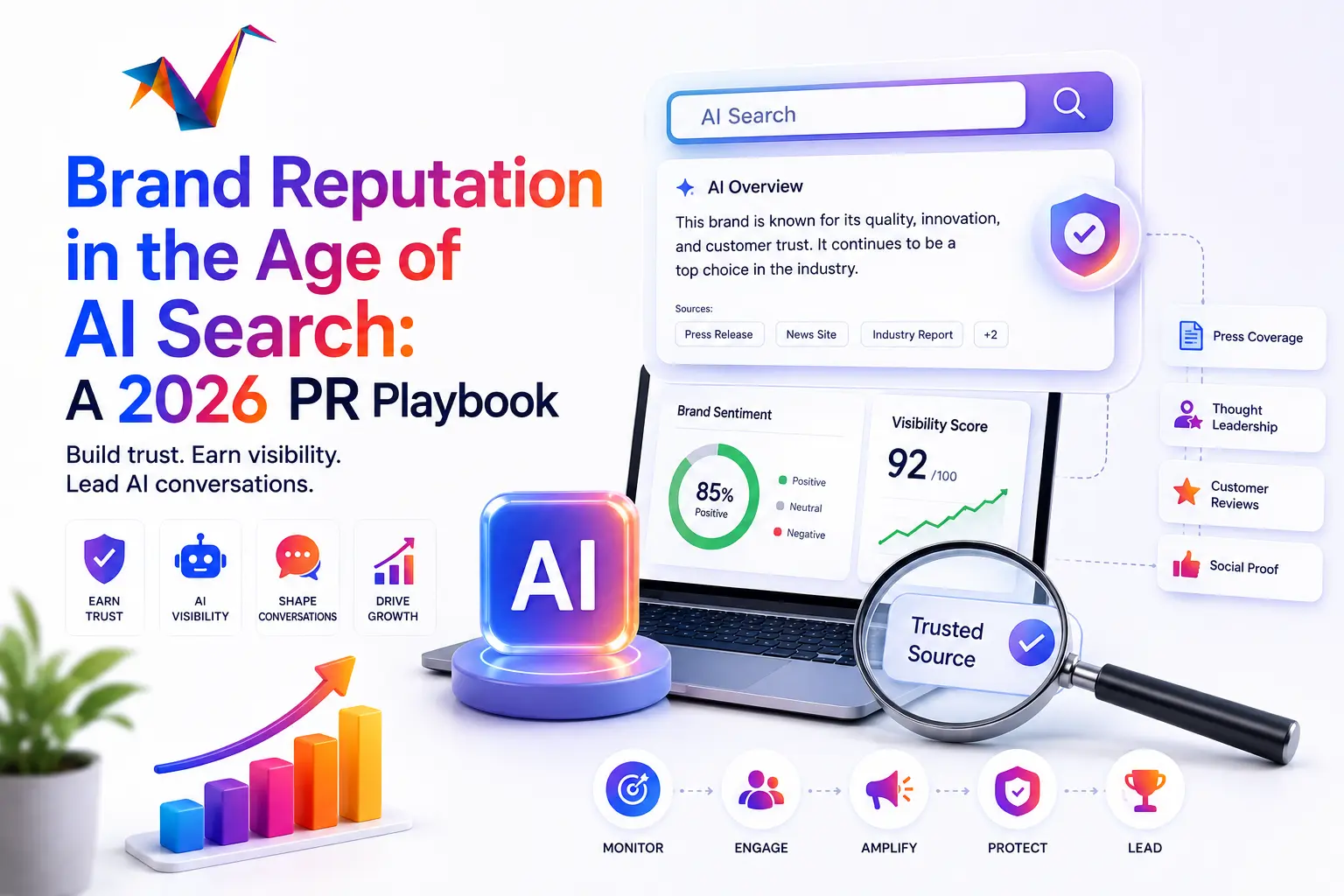
AI assistants like ChatGPT, Gemini, and Perplexity now summarize what your brand is, what it's known for, and how it compares to competitors — often before a customer ever visits your website. Traditional PR built for search engine rankings and journalist pickup isn't enough anymore. In 2026, reputation management means actively shaping how AI models describe your brand, which requires a different playbook: source diversity, sentiment consistency across the web, and structured brand information AI systems can parse and trust.
Ask an AI assistant what it thinks of a brand today, and you'll get a confident, specific answer — pulled together from review sites, news coverage, forums, comparison articles, and your own website. The problem is that most brands have no idea what that answer currently says, and even less control over it. Unlike a Google ranking you can track and influence directly, AI-generated brand summaries are assembled from dozens of sources at once, weighted in ways that aren't fully visible. That's the new PR battleground.
Why Traditional PR Isn't Enough for AI Search
Classic PR optimized for two audiences: journalists (for coverage) and search engines (for rankings). Both audiences responded to relatively predictable signals — a good pitch, a strong backlink profile, consistent NPR-style press release cadence.
AI models respond to something broader: the aggregate pattern of how your brand is discussed across the entire web, weighted by source credibility, recency, and consistency. A single glowing press release means little if review sites, forums, and comparison content tell a different story. AI systems are, in effect, cross-referencing your brand's reputation the way a skeptical buyer would — and building their summary from whatever they find most consistent and well-supported.
What Actually Shapes How AI Describes Your Brand
1. Third-party validation, not owned content
AI models weight independent sources — review platforms, industry publications, comparison sites, Reddit and forum discussions — more heavily than brand-owned content when forming an opinion. A brand with strong owned content but thin third-party presence often gets described in vague, generic terms because the AI has little independent signal to draw from.
2. Sentiment consistency across sources
Mixed signals confuse AI summaries the same way they'd confuse a person reading ten reviews in a row. A brand with 4.6 stars on one platform and persistent unresolved complaints on another tends to get a hedged, cautious AI description. Consistency in how a brand is discussed — not just volume of mentions — is what produces a confident, positive AI summary.
3. Structured, factual brand information
AI models pull cleanly from content that states facts plainly: what the company does, who it serves, what makes it different, verifiable credentials or certifications. Vague, adjective-heavy brand copy ("industry-leading," "world-class") gives AI systems little to actually cite, so it often gets dropped or generalized away entirely in the summary.
4. Recency of mentions
Older brand narratives can persist in AI training and retrieval longer than most marketers expect. A negative story from two years ago that was never counterbalanced with newer, positive coverage can still surface in AI summaries today. Active, ongoing PR and content — not a one-time push — is what keeps the narrative current.
Building the 2026 PR Playbook
Step 1: Audit what AI currently says about you
Before building a strategy, ask multiple AI assistants directly what they know about your brand, your reputation, and how you compare to named competitors. Document the gaps, inaccuracies, and outdated narratives. This audit is the foundation everything else builds on — it's the same diagnostic starting point we use in AI search visibility audits.
Step 2: Diversify third-party presence deliberately
Don't rely on one or two review platforms. Actively build presence across the sources AI models cross-reference most: industry-specific review sites, comparison articles, credible publication mentions, and community discussions. This is slower than a single press push, but it's what produces durable, trusted AI summaries.
Step 3: Resolve and respond to negative sentiment publicly
Unaddressed negative reviews or complaints don't just hurt human trust — they become part of the AI's aggregate read on your brand. Public, resolved responses to legitimate complaints show up as a signal of accountability, which AI models tend to reflect in more balanced summaries.
Step 4: Publish structured, factual brand and product content
Clear "About," comparison, and FAQ content written in plain, specific, citable language gives AI systems something concrete to pull from. This overlaps directly with strong on-site GEO/AEO content strategy — the same structural principles that help a brand rank in AI Overviews also help AI models describe the brand accurately elsewhere.
Step 5: Maintain PR cadence, not campaigns
One-off press pushes fade from relevance faster in an AI-retrieval world than they did in a traditional search-ranking world. Ongoing, smaller cadence PR and content — new mentions, updated comparisons, fresh coverage — keeps the AI's picture of your brand current rather than anchored to whatever was written years ago.
How This Connects to Paid and Organic Performance
Brand reputation in AI search isn't a standalone PR exercise — it compounds with everything else in your marketing stack. Buyers researching a purchase through AI assistants form an impression before they ever click a paid ad, which affects click-through rates and conversion once they land. A brand with a strong, consistent AI-search reputation typically needs to work less hard — and spend less — to convert traffic that arrives already trusting them.
Frequently Asked Questions
How do I find out what AI assistants are saying about my brand?
Ask several AI tools directly — what they know about your brand, how it compares to named competitors, and what its reputation is. Look for outdated information, factual errors, and inconsistent sentiment across the answers.
Can I directly control what AI models say about my brand?
Not directly, but you can strongly influence it by shaping the underlying sources AI models draw from — third-party reviews, structured on-site content, industry mentions, and consistent sentiment across the web.
Is AI brand reputation different from traditional online reputation management?
It overlaps significantly but isn't identical. Traditional ORM focuses on search rankings and review scores. AI reputation management also requires structured, factual content and source diversity specifically built for how AI models synthesize and summarize information.
In 2026, the first impression a customer forms of your brand often comes from an AI assistant, not your homepage. If you want a clear picture of what AI systems currently say about your brand and a plan to shape that narrative, Varnix can run a full AI reputation and search visibility audit.