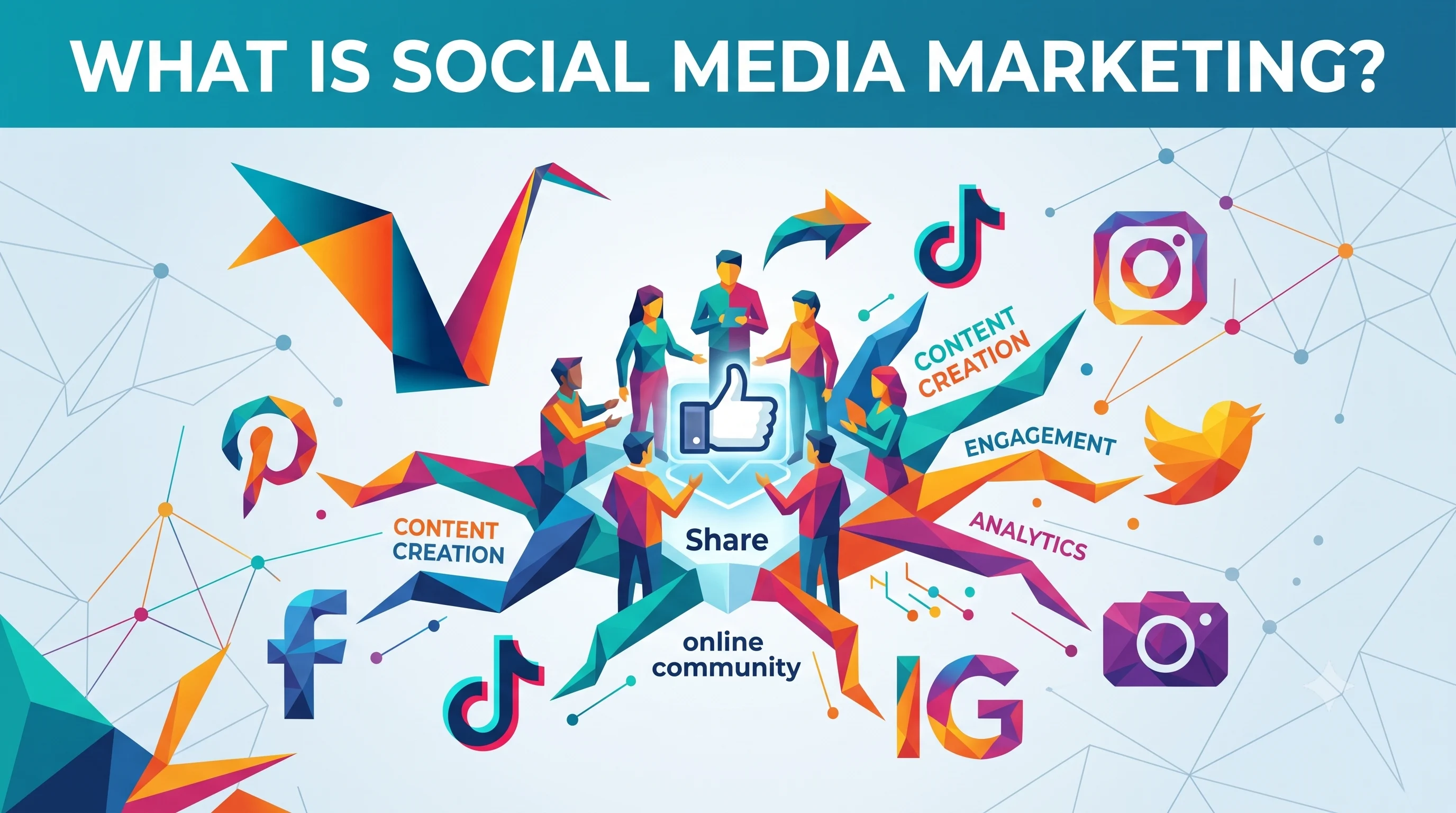
Social media marketing is the practice of using platforms like Instagram, Facebook, LinkedIn, and YouTube to promote a brand, engage an audience, and drive measurable business outcomes such as leads, traffic, or sales. It covers organic posting, paid advertising, influencer partnerships, and community management on the same platforms.
Most businesses treat it as one channel. It is actually four separate disciplines working together.
What Are the Main Types of Social Media Marketing?
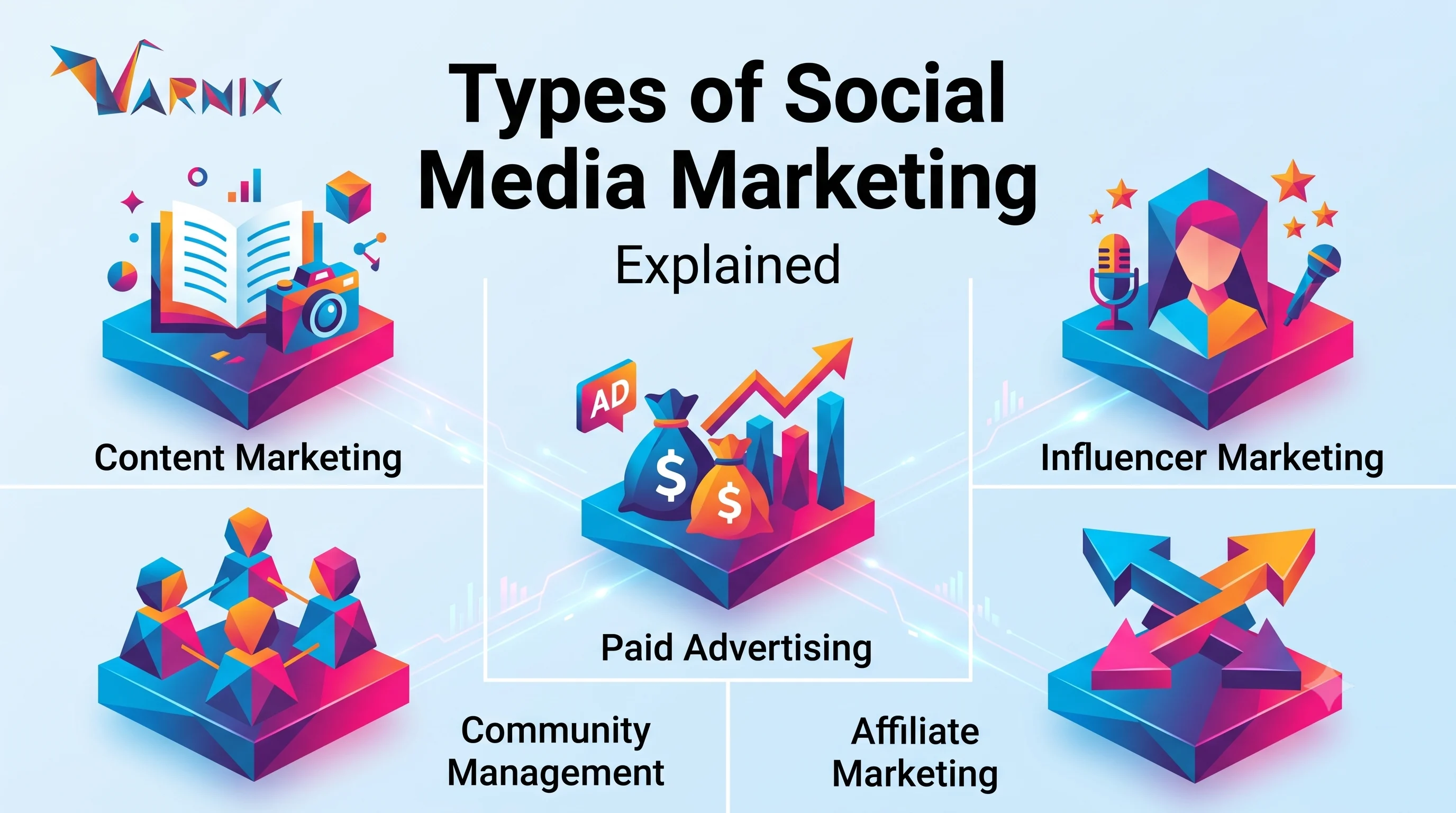
| Type | What It Does | Example |
|---|---|---|
| Organic content marketing | Builds audience and brand voice through unpaid posts | Daily Instagram carousels, LinkedIn thought leadership |
| Paid social advertising | Targets specific audiences with budgeted ad spend | Meta Ads, LinkedIn Sponsored Content |
| Influencer marketing | Uses creator audiences to extend reach and trust | A skincare brand partnering with a beauty creator |
| Community and social listening | Manages comments, DMs, and brand mentions | Responding to customer complaints on X within an hour |
Each type serves a different goal. Organic content builds long term brand recall. Paid advertising delivers short term, trackable conversions. Influencer marketing borrows an audience's existing trust. Community management protects reputation and turns followers into repeat customers.
How Does Social Media Marketing Work?
A business picks the platforms where its audience is active, then publishes content built for that platform's format and algorithm. Instagram rewards short video and carousel posts. LinkedIn rewards text posts with a personal angle. YouTube rewards watch time.
The platform then serves that content to users based on engagement signals: likes, comments, shares, saves, and watch duration. More engagement in the first hour after posting means more distribution. This is why posting time and format matter as much as the message itself.
Paid campaigns work differently. A business sets a budget, defines an audience by age, location, interest, or behavior, and the platform auctions ad space to the highest relevant bidder. Results show up in a dashboard within hours, not weeks.
What Are the Benefits of Social Media Marketing?
- Direct access to buyers. No middleman, no waiting for a journalist to cover you.
- Lower cost per lead than most traditional channels. A well targeted Meta or LinkedIn campaign often costs a fraction of print or TV.
- Real time feedback. Comments and shares tell you what resonates before you spend more budget.
- Compounding organic reach. A strong content library keeps attracting traffic months after publishing, unlike a one time ad.
- Trust signals for AI search. Platforms like ChatGPT and Perplexity increasingly pull brand mentions from social conversations when answering product questions. A brand active on social has a better shot at getting cited by AI search tools than one with no social presence at all.
Sprout Social's 2026 research on platform usage confirms the scale involved: brands now manage social media reach that spans over 5 billion users worldwide, so even a narrow, well defined audience segment is large enough to build a real business around.
What Does a Social Media Marketing Strategy Include?
A working strategy has five parts:
- A defined audience. Not "everyone interested in fitness." Something specific: "women aged 25 to 40 in Tier 1 Indian cities researching home workout equipment."
- A platform priority list. Pick two platforms to start, not five. Depth beats spread.
- A content calendar. Weekly themes, posting frequency, and format mix planned at least a month ahead.
- A paid budget tied to a goal. Awareness campaigns and conversion campaigns need different budgets, creative, and metrics.
- A reporting rhythm. Weekly checks on engagement, monthly checks on conversions and cost per lead.
Businesses that skip the audience definition step usually end up producing content that gets likes but no customers. This is the single most common gap between brands that see results and brands that just post.
How Much Does Social Media Marketing Cost?
Costs vary by scope, but three components make up most budgets: content production, paid ad spend, and management fees if you outsource. A single platform managed in house with a part time resource might cost far less than a multi platform strategy run by an agency with dedicated strategists, designers, and paid media specialists.
For a full breakdown of what agencies typically charge in India, see how much social media marketing services cost in 2026.
What Mistakes Should You Avoid in Social Media Marketing?
- Posting without a goal. Every post should map to awareness, engagement, or conversion. If it doesn't, question why it's being published.
- Ignoring comments and DMs. A follower who messages and gets no reply within a day is a lost customer, not just a missed interaction.
- Copying competitor content style without adapting it. What works for a national brand with a large following rarely works the same way for a smaller, newer account.
- Treating every platform the same. A LinkedIn post reformatted for Instagram usually underperforms on both.
- Measuring vanity metrics only. Follower count means little if it doesn't translate to leads or sales. Track cost per lead and conversion rate instead.
Should You Hire a Social Media Marketing Agency or Do It In-House?
It depends on team size, budget, and how many platforms you're running. A single platform with light posting needs can often be handled internally. Multiple platforms, paid campaigns, and consistent content production usually need dedicated specialists.
Varnix runs full social media marketing programs for brands across India, from strategy and content production to paid campaign management and reporting. If you're weighing the two paths, is hiring a social media marketing agency worth it breaks down the tradeoffs in more detail, and outsourcing social media marketing covers the pros, cons, and real costs of going the agency route.
For a closer look at what an agency actually does day to day, read what does a social media marketing agency do and what is a social media marketing agency. If you're comparing providers, how to choose the right social media marketing agency and the benefits of hiring an agency are worth reading before you sign a contract. You can also explore Varnix's full service offering directly.
Frequently Asked Questions
What is the difference between social media marketing and social media management?
Marketing focuses on strategy, campaigns, and growth goals. Management focuses on day to day execution: posting, responding to comments, and monitoring mentions. Most agencies handle both under one contract.
Which social media platform is best for marketing?
It depends on the audience. LinkedIn works best for B2B brands, Instagram and YouTube work best for consumer brands with visual products, and Facebook still delivers strong reach for local businesses in India.
How long does social media marketing take to show results?
Paid campaigns can show results within days. Organic growth typically takes three to six months of consistent posting before it produces a meaningful, steady flow of leads.
Do small businesses need social media marketing?
Yes, particularly local and D2C businesses, since it's one of the lowest cost ways to reach a defined audience directly without needing a large media budget.
Can social media marketing work without paid ads?
Yes, through organic content and community engagement, though growth is usually slower. Most brands combine both for faster, more predictable results.