If you've ever Googled "social media marketing agency" and landed on a page full of buzzwords and stock photos of people pointing at charts — you're not alone in feeling confused.
This guide cuts through all of that. It's written for the founder wondering if they can keep handling their own Instagram, the marketing manager who needs to make a business case for outsourcing, and the curious person who just wants to understand what these agencies actually do all day.
No fluff. No gatekeeping. Let's get into it.
1. What Exactly Is a Social Media Marketing Agency?
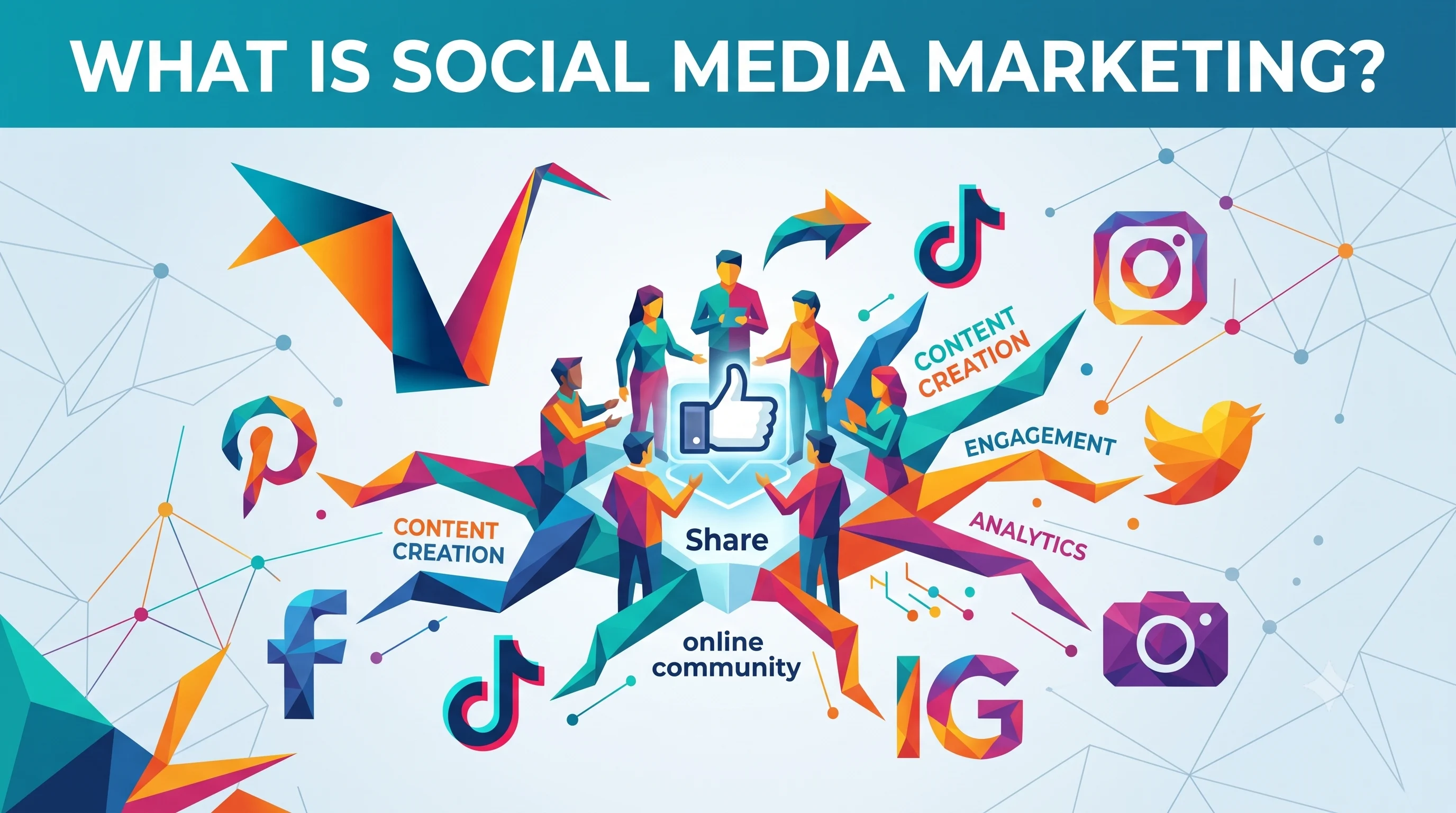
A social media marketing agency is a company that manages, creates, and grows a brand's presence on social platforms — Instagram, Facebook, LinkedIn, X (Twitter), YouTube, TikTok, Pinterest — on behalf of their clients.
Think of them as the marketing team you hire externally instead of building in-house. They bring strategy, creative production, analytics, and paid advertising expertise under one roof.
In plain terms: They figure out what to post, when to post it, how to make it look good, how to run ads around it, and how to measure whether any of it is actually working — so you don't have to.
But the best agencies go beyond "posting content." They function as a brand's external growth partner — thinking about positioning, community, narrative, and how social media connects to your broader business goals like leads, sales, and brand equity.
Aren't they the same as a digital marketing agency?
Not quite. A digital marketing agency handles the full spectrum: SEO, Google Ads, email, web development, and sometimes social too. A social media marketing agency specialises specifically in social channels. Some firms offer both (full-service), while others are narrow specialists. There's no universally right answer — it depends on what you need.
2. What Services Do They Actually Offer?
This varies by agency, but here's the core menu most reputable ones offer:
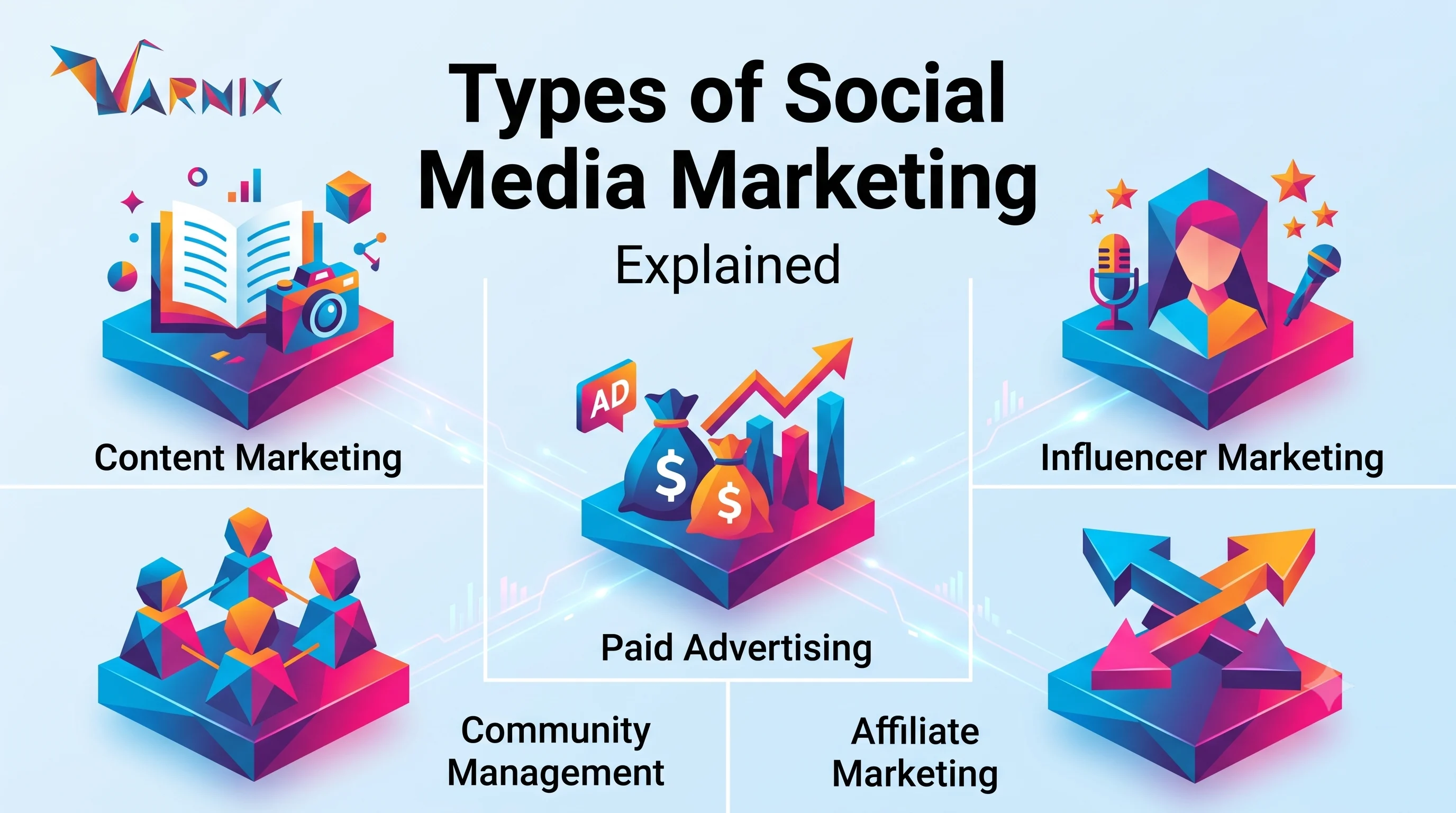
- Content Strategy & Calendars — Monthly content plans, platform-specific formats, pillar topics, and posting schedules aligned to your business goals.
- Creative Production — Graphic design, Reels and Shorts scripts and editing, carousels, and brand-consistent visuals across every format.
- Community Management — Responding to comments and DMs, maintaining brand tone consistency, and running engagement initiatives that build real relationships.
- Paid Social Advertising — Meta Ads, LinkedIn Ads, YouTube Ads — campaign setup, audience targeting, optimisation, retargeting, and A/B testing creatives.
- Influencer Marketing — Identifying, vetting, briefing, and managing creator and influencer partnerships from nano-influencers to macro deals.
- Analytics & Reporting — Monthly performance dashboards covering reach, engagement, conversions, and cost-per-result — with actionable insights, not just data dumps.
- Brand Strategy — Tone of voice, visual identity guidelines, content pillars, positioning workshops, and competitive landscape mapping.
- Growth & Virality Campaigns — Moment marketing, hashtag campaigns, challenges, and user-generated content drives that extend reach organically.
Some agencies also include web design, SEO, PR, and Performance Marketing under one roof — making them full-service partners rather than purely social specialists.
3. How Does Working With One Actually Work?
People on Reddit and Quora ask this constantly, and it's a fair question — the process can feel like a black box from the outside. Here's how a typical engagement flows:
- Week 1–2: Discovery & Onboarding — The agency learns your brand — your goals, audience, competitors, past content performance, tone of voice, and what "success" looks like to you. Good agencies ask a lot of questions here. If they don't, that's a warning sign.
- Week 2–3: Strategy & Content Plan — They propose a strategy: which platforms to prioritise, what content formats to focus on, posting frequency, and how paid media fits in. You review and approve — or push back. That's allowed and encouraged.
- Ongoing: Production & Publishing — The creative team writes copy, designs visuals, and edits videos. Most agencies operate on a content calendar and submit drafts for your approval before anything goes live. You maintain final say at all times.
- Ongoing: Live Management — Posts go live. The team monitors performance, engages with your audience, adjusts based on what's working, and manages ad campaigns in real time.
- Monthly: Reporting & Reviews — Regular reports on key metrics, plus calls to walk through results and recalibrate the strategy based on data.
Pro tip: The best agency relationships feel like a collaboration, not an outsourcing transaction. If your agency never asks for your opinion or feedback, they're probably not learning your brand well enough to represent it effectively.
4. DIY vs. Hiring an Agency — Honest Comparison
This is the real question most people are wrestling with. Here's a straight breakdown:
- Cost — DIY: Low upfront; high in time and tools. Agency: Monthly retainer, but saves internal hours.
- Brand Knowledge — DIY: Deep by default. Agency: Requires onboarding investment.
- Specialist Skills — DIY: Usually limited to 1–2 people. Agency: Strategist + designer + copywriter + media buyer.
- Consistency — DIY: Depends on your bandwidth. Agency: Built into the service.
- Speed to Results — DIY: Slower — learning curve is real. Agency: Faster — they've seen what works.
- Scalability — DIY: Hard — hiring takes time. Agency: Easy — add services as you grow.
- Control — DIY: Full. Agency: Shared — some brands find this uncomfortable.
- Ad Platform Expertise — DIY: Needs ongoing learning. Agency: Core competency.
The honest answer? Neither is universally better. A 5-person startup might do better learning the ropes themselves first. A 50-person company serious about growth almost always benefits from professional support. The tipping point is usually when your time spent on social media is costing you more than an agency would.
5. How Much Do They Cost? (Real Numbers)
Pricing varies enormously. Here's an honest breakdown based on market norms in India:
- Basic retainer (small agency or freelancer team): ₹15,000 – ₹30,000/month — Covers organic content management for 1–2 platforms. Limited strategy depth.
- Mid-tier agency (strategy + content + management): ₹30,000 – ₹80,000/month — Full monthly content calendar, creative production, community management, and monthly reporting.
- Full-service agency (strategy + ads + production + PR): ₹80,000 – ₹2,00,000+/month — Comprehensive engagement covering multiple platforms, paid media management, influencer coordination, and brand strategy.
- Paid media management fee: Typically 15–20% of ad spend, billed on top of the retainer.
In addition to agency fees, you'll have your ad budget — the money that goes directly to Meta, Google, YouTube, etc. This is always separate. Most agencies recommend a minimum of ₹15,000–₹50,000/month in ad spend to see meaningful results from paid campaigns.
Watch out for: Agencies quoting suspiciously low (under ₹10,000/month for "full service"). That usually means very junior talent, volume-churned templated content, or work that looks active but doesn't move the needle.
6. When Should You Hire a Social Media Marketing Agency?
Here are the clearest signals it's time to bring in outside help:
- Your team is posting inconsistently because "someone handles it when they have time"
- You're running ads but can't explain what's working or why
- Your content looks different from post to post — no brand coherence
- You have growth goals (lead gen, sales, awareness) but no documented strategy
- You've been active on social for 6+ months but growth and engagement are flat
- You're launching a new product, entering a new market, or rebranding
- You need expertise on platforms (LinkedIn B2B, TikTok, YouTube) your team doesn't know well
- Your competition's social presence is visibly outpacing yours
If three or more of these resonate, it's worth having the conversation.
7. Red Flags to Watch Out For
This is the section most agencies won't write for you.
- Guaranteed follower counts or viral promises — Real growth can be targeted but never guaranteed. Any agency promising "10,000 followers in 30 days" is either planning to buy bots or wildly overpromising. Both are bad.
- No strategy conversation in the sales process — If they jump straight to pricing without asking about your goals, audience, or brand — they're selling a template, not a tailored solution.
- Vague reporting or no KPIs defined upfront — A trustworthy agency will define what success looks like before work begins. "We'll grow your presence" is not a KPI. Reach, engagement rate, cost-per-lead, and conversion attribution are.
- No content approval process — You should always review and approve content before it goes live. Any agency that publishes without your sign-off is a liability — not just creatively but reputationally.
- Long lock-in contracts with no performance clauses — Three-month minimums are reasonable for strategy to show results. Twelve-month lock-ins with no exit provisions are not. Read every term.
- Vanity metrics as the only success story — Impressions and follower counts are easy to inflate. If their case studies only show reach and never show revenue, leads, or conversions — ask why.
8. How to Choose the Right Agency for Your Brand
There are hundreds of agencies out there. Here's how to actually narrow it down:
- Match their expertise to your industry — An agency that's crushed it for D2C fashion brands may not be the right fit for a B2B SaaS company. Look at their portfolio — do they have experience in your space or an adjacent one?
- Evaluate their own social media — Check their Instagram, LinkedIn, and website. Is their content good? Is their brand clear? If they can't market themselves effectively, that tells you something important.
- Speak to their past clients — Ask for 1–2 references and actually call them. The questions to ask: Did they communicate well? Did results match what was promised? Would you hire them again?
- Assess cultural fit — You'll be sharing brand access, creative direction, and sometimes sensitive business information with this team. Trust and communication style matter as much as capability.
- Understand who actually works on your account — Some agencies pitch with senior strategists and then hand you off to a junior once signed. Ask directly: who day-to-day manages my account, and can I meet them?
The right agency doesn't just execute your brief. They push back on it, improve it, and bring ideas to the table you hadn't considered.
9. Questions to Ask Before Signing Any Contract
Use this as your checklist in the proposal stage:
- What does your onboarding process look like? How long before we see first content?
- How many clients does each account manager handle simultaneously?
- What does the content approval process look like, and what are the turnaround times?
- What KPIs will you report on, and how often?
- What happens if a campaign isn't performing — what's the optimisation process?
- Is ad spend included in the retainer, or billed separately?
- Who owns the creative assets if we end the relationship?
- Can you show us 2–3 examples most similar to our brief?
- What's the notice period and exit clause?
10. Ready to Grow? Here's Why Brands Choose Varnix
If you've read this far, you're not just curious — you're seriously evaluating your options. So here's a straight pitch.
Varnix is a performance media and brand growth agency built for brands that want more than a content calendar. They function as a full-spectrum creative and growth partner — from brand strategy and content production to paid Performance Marketing and PR.
Here's what they bring to the table:
- Social Media & Community Building — Platform-first strategy, custom monthly content calendars, Reels and Shorts production, influencer tie-ups, real-time moment marketing, and genuine fan engagement — not just post scheduling.
- Performance Marketing — Meta Ads, Google PPC, YouTube Ads — funnel-based campaigns (lead gen, sales, e-commerce scaling) with pixel tracking, retargeting, segmentation, and rigorous A/B testing. Every rupee is accountable.
- Brand Strategy & Identity — Brand audits, positioning workshops, naming, tone-of-voice development, identity design, and competitive landscape mapping. Because good content without a clear brand strategy is just noise.
- Creative Content Production — Brand films, product videos, ad films, short-form video, motion graphics, cinematic edits, 3D mockups, podcast content, and post-production — in-house.
Varnix has worked with brands across sports franchises, retail, F&B, real estate, and lifestyle — including IPL team campaigns and large-scale event marketing.
What makes them different: They don't sell you a package. They build a growth strategy first, then build the execution around it. Transparent reporting, flexible models, and a team that treats your goals as their own.
Start a free strategy conversation with Varnix — contact
The Bottom Line
A social media marketing agency, at its best, is a force multiplier for your brand. They bring the skills, tools, and experience that would take years to build internally — and they let you focus on what you actually do well.
The key is choosing one that treats your goals as their own, communicates honestly about what's working and what isn't, and has the creative ability to make your brand genuinely worth watching.
If that's what you're looking for, Varnix is worth a conversation.
11. Frequently Asked Questions
Is it worth hiring a social media agency for a small business?
Yes — if your social presence directly impacts leads or sales and you don't have in-house capacity to do it consistently and well. The ROI equation shifts when you count the time a founder or team member spends trying to DIY social media against what a focused agency can achieve. Start with a clear goal and find an agency that has achieved that before.
How long does it take to see results from a social media agency?
For organic content-led growth, expect 3–6 months before meaningful traction. Paid campaigns can show measurable results within 2–4 weeks, though real optimisation happens over 1–3 months. Any agency promising instant organic results is overpromising.
What's the difference between a social media agency and a freelancer?
A freelancer is typically one person handling one or two things — design, copywriting, or management. An agency is a team — strategy, creative, paid media, analytics, production — under one contract. Freelancers can be more flexible and affordable; agencies offer more breadth and accountability. The right choice depends on your scope and scale.
Do I need to give the agency access to my accounts?
Yes. They'll need admin or editor access to your social profiles and ad accounts. A trustworthy agency will never ask for your personal password — they work through platform Business Managers and official access protocols. You should always retain owner-level access on all platforms yourself.
Can an agency guarantee a certain number of followers or leads?
Not honestly, no. Reputable agencies set directional targets based on data and past performance — but no one can guarantee social media outcomes because platform algorithms, market conditions, and audience behaviour are always in flux. Be very cautious of hard guarantees.
What should I prepare before talking to a social media agency?
Have a clear sense of: your goal (what are you trying to achieve?), your audience (who are you trying to reach?), your current performance (what are your analytics showing?), and your rough budget range. You don't need a polished brief — a good agency will help you shape one — but having these basics ready makes the conversation far more productive.
What platforms should my brand be on?
Not all of them. Instagram and Facebook work for B2C and lifestyle brands. LinkedIn is essential for B2B. YouTube suits long-form education or brand storytelling. TikTok and Shorts are strong for brands targeting under-30 audiences. A good agency will recommend based on where your customers actually spend time — not where it's easiest to post.